Emanuel Ax Plays Beethoven
Laurie Shulman, Program Notes Annotator
Ludwig van Beethoven | Piano Concerto No. 3 with Pianist Emanuel Ax
Terence Blanchard | Fire Shut Up in My Bones Suite
Maurice Ravel | La valse

Piano Concerto No. 3 in C minor, Op. 37
Ludwig van Beethoven (LOOD-vig van BAY-toh-ven)
Born 16 December, 1770 in Bonn, Germany
Died 26 March, 1827 in Vienna, Austria
Orchestration: woodwinds, horns and trumpets in pairs, timpani, solo piano and strings
Beethoven’s Third Concerto heralded a new, bold style in his music. His audience must have been stunned at its premiere in April 1803, for Opus 37 is a very different work from its predecessors, the C Major Concerto, Op. 15, and the B-flat Concerto, Op. 19. It is far longer, considerably weightier in musical content, and increasingly demanding for the soloist. Beethoven was stimulated by the possibilities of the new, larger early 19th-century pianos, which allowed him to expand the keyboard range in the Third Concerto. The work also demands greater virtuosity from the soloist than its predecessors.
What is an Opus (Op.) number?
A numerical label assigned to a composer’s works, usually in the order they were composed or published. It’s a way to distinguish between different pieces by the same composer
While the C minor concerto adheres broadly to classical structure, Beethoven takes some daring steps, beginning with the aggressive scales that introduce the soloist’s statement of the main theme. From its opening outline of a C minor triad and insistent repeat of the dropped fourth, the concerto communicates power, stature, and imposing command.
Cadenza
a virtuoso solo passage inserted into a movement of a concerto or other work
After the first movement cadenza, the pianist continues to play during the coda. This was highly unusual in the late 18th and early 19th centuries. In Beethoven’s coda, the soloist engages in a subtle, ominous duet with timpani that is entirely original.
Coda
a concluding passage that brings a piece or movement to a satisfying end
Beethoven’s slow movement is in the distant key of E major. The soloist sets an ecstatic mood with an unaccompanied theme that hints at the intricate embroidery to follow. Flute and bassoon share some glorious woodwind writing in a dialogue throughout this Largo. The closing Rondo returns to C minor and the heroic, driven style that characterizes so much of Beethoven’s music in that tonality. Brief cadenzas and furious passage work attest to the 30-year-old composer’s brilliant technique. In the coda, Beethoven switches to C major and 6/8 time, lifting the storm clouds to conclude the work in a blaze of sunshine.
Suite from Fire Shut Up in My Bones
Terence Blanchard (TEHR-uhns BLAN-chard)
Born 13 March 1962 in New Orleans
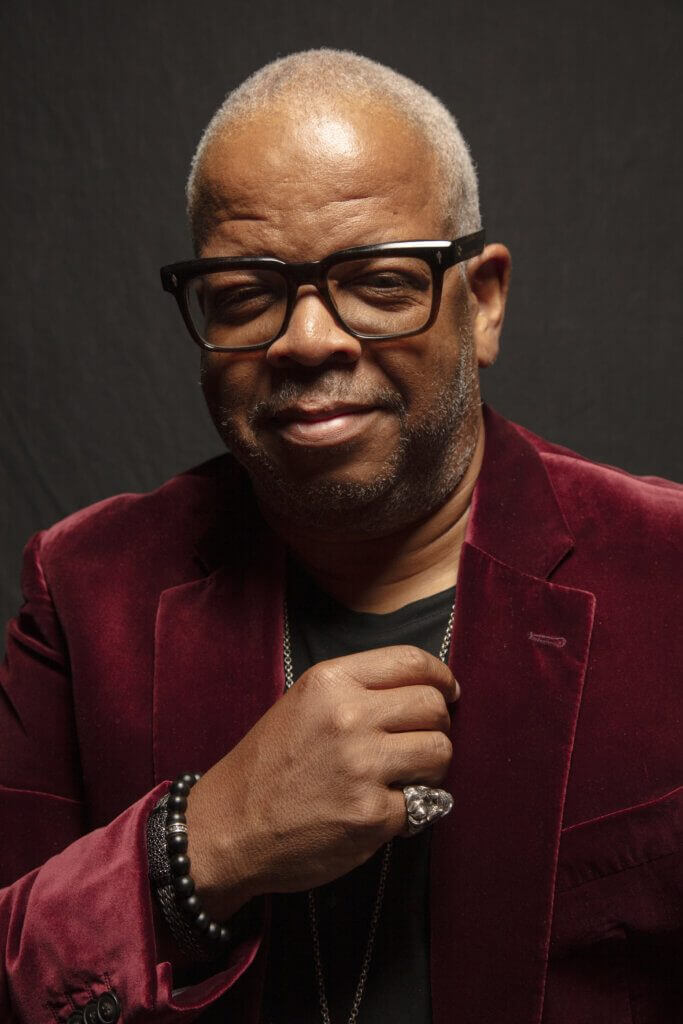
Grammy-award-winning Terence Blanchard is a jazz trumpeter and composer who has written extensively for film and television, including the scores for 15 of director Spike Lee’s movies. Blanchard is also the composer of two operas: Champion (2013), based on the life of the Black welterweight boxer Emile Griffith, and Fire Shut Up in My Bones, which in 2021 became the first opera by a Black composer to be performed by the Metropolitan Opera in its 139-year history. Blanchard and librettist Kasi Lemmons based Fire Shut Up in My Bones on the bestselling 2014 memoir by former New York Times columnist Charles Blow. The book tracks Blow’s troubled childhood in rural Louisiana, his struggle with family dysfunction and sexual abuse, turbulent years at a state university, and his path to a respected career as a journalist.
The Canadian conductor Yannick Nézet-Seguin, who led performances of Blanchard’s opera in New York, is also the music director of the Philadelphia Orchestra. He asked Blanchard to extract an instrumental suite from the opera’s full score. Rather than adapt individual numbers as separate movements, Blanchard crafted a single 15-minute movement that sums up the opera, with connected sections in contrasting tempos and moods. As is the case in Blanchard’s other music, the score draws on jazz and gospel elements as well as classical techniques. His expressive music reflects the principal themes of Charles Blow’s powerful memoir: trauma, self-discovery, and redemption.
La valse
Maurice Ravel (maw-REES rah-VEL)
Born 7 March, 1875 in Ciboure, Basses-Pyrénées, France
Died 28 December, 1937 in Paris
Orchestration: three flutes (third doubling piccolo), two oboes, English horn, two clarinets, bass clarinet, two bassoons, contrabassoon, four horns, three trumpets, three trombones, tuba, timpani, triangle, Basque tambourine, cymbals, bass drum, castanets, tam-tam, tambourine, crotales, two harps, and strings
La valse began life as a ballet score for the Russian impresario Serge Diaghilev, who approached Ravel in 1919 about a new work. Ravel decided to rework some 1906 sketches as a grande valse, thinking of an homage to Johann Strauss II, Vienna’s ‘Waltz King.’ Ironically, Diaghilev rejected the score when he received Ravel’s manuscript, citing prohibitive production expense. Ravel secured an orchestral premiere in December 1920, and the work has enjoyed great popularity since as an instrumental piece.
Subtitled “choreographic poem,” La valse consists of twelve minutes of swirling rhythms and dynamics viewed through a kaleidoscope of orchestral colors. A note in the score describes the scenario:
Clouds whirl about. Occasionally they part to allow a glimpse of waltzing couples. As they gradually lift, one can discern a gigantic hall, filled by a crowd of dancers in motion. The stage gradually brightens. The glow of the chandeliers breaks out fortissimo.
Essentially an elongated giant crescendo, La valse is dynamically related to Boléro, though its tension builds in an altogether different fashion. Ravel thought of it as a “fatefully inescapable whirlpool,” an essentially tragic work whose frenetic mania is cut off by death.
This information is protected by copyright and is provided solely as a benefit to Kalamazoo Symphony patrons.
Reproduction in any form without written permission from the Program Annotator is strictly prohibited.
Become a Season Subscriber
A season ticket subscription to the Kalamazoo Symphony gives you the best seats at the best prices and access to unforgettable memories and music all season long!